7 Surprising Ways a Laser Wood Cutter and Engraver Can Boost Your Business
Boost Your Business
7 Surprising Ways a Laser Wood Cutter and Engraver
If you create custom wood products, precision matters. Whether you’re a furniture maker, sign manufacturer, or craftsperson, accurate, fast cutting and engraving are essential—and a laser wood cutter and engraver delivers that. But this tool offers more than workflow improvements; it can transform your business with unexpected benefits, from intricate designs to reduced waste, helping you grow.
In this article, we’ll explore 7 surprising ways a laser wood cutter and engraver can boost your business. These advantages will help you stand out in a crowded marketplace, taking your operations and offerings to the next level.

Laser Wood Cutter and Engraver
Table of Contents
1. Benefits of Using a Laser Wood Cutter and Engraver for Business
2. Conclusion and Next Steps for Implementing a Laser Wood Cutter and Engraver in Your Business
3. Cost and Order Feasibility Assessment
4. Choose Suitable Laser Cutter and Engraver for Wood
5. FAQS
Benefits of Using a Laser Wood Cutter and Engraver for Business
1. Cost Savings with Laser Wood Cutter and Engraver
One of the most significant benefits of using a laser wood cutter and engraver is the cost savings it can provide. Traditional cutting and engraving methods can be time-consuming and require a great deal of manual labor, which can drive up costs. However, with a laser wood cutter and engraver, you can automate many of these processes, reducing the need for manual labor and cutting down on production time. This not only saves you money on labor costs, but it can also help you reduce material waste, especially if you are cutting intricate designs that require a high degree of precision. Additionally, laser wood cutters and engravers can be programmed to cut and engrave multiple pieces at once, which can further reduce production time and costs.
Another way that laser wood cutters and engravers can save you money is by reducing the need for specialized tooling and equipment. With a laser wood cutter and engraver, you can cut and engrave a wide range of materials, including wood, acrylic, plastic, and more, eliminating the need for specialized equipment and tools for each material. This not only saves you money on equipment costs, but it can also streamline your production process, making it easier to create custom products quickly and efficiently.
title="Engraved Wood Ideas | Best Way to Start a Laser Engraving Business | MimoWork Laser"
frameborder="0"
allow="accelerometer; autoplay; clipboard-write; encrypted-media; gyroscope; picture-in-picture; web-share"
referrerpolicy="strict-origin-when-cross-origin"
allowfullscreen
loading="lazy">
If you are Interested In the Laser Cutter and Engraver for Wood,
You Can Contact Us for More Detailed Information and Expert Laser Advice
7. Test Business Feasibility with a Real Order
A laser wood cutter and engraver may support products such as custom signs, personalized gifts, decorative panels, and repeat-batch components. However, each product should be validated through material testing, measured cycle time, complete cost, and expected demand.

Wooden Stools Made By Laser Cutting
Custom Wooden Signs
Confirm the wood type, dimensions, engraving area, cutting requirements, order quantity, delivery date, and selling price. Test the actual material and calculate the complete production time and cost before accepting the order.
Personalized Wooden Gifts
Include the time required to prepare variable names or graphics, position each item, engrave the design, inspect the result, and pack the finished product. Personalization is feasible only when the selling price covers the additional handling and production time.
Repeat-Batch Wooden Components
Measure the complete cycle time, including loading, cutting, unloading, cleaning, inspection, and expected rework. Confirm that the available production time can meet the required quantity and delivery schedule.
These examples are evaluation scenarios rather than verified customer results. A product is commercially feasible only when testing confirms acceptable quality, sufficient capacity, and a positive contribution per order.
Video Guide | 2023 Best Laser Engraver for Wood
title="2023 Best Laser Engraver (up to 2000mms) Ultra-speed | MimoWork Laser"
frameborder="0"
allow="accelerometer; autoplay; clipboard-write; encrypted-media; gyroscope; picture-in-picture; web-share"
referrerpolicy="strict-origin-when-cross-origin"
allowfullscreen
loading="lazy">
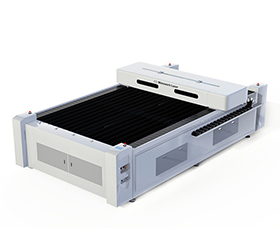
Large Laser Engraver and Cutter Machine
You Can Contact Us for More Detailed Information and Expert Laser Advice
Large Laser Engraver and Cutter Machine
|
Working Area (W * L) |
1300mm * 2500mm (51” * 98.4”) |
|
Software |
Offline Software |
|
Laser Power |
150W/300W/450W |
|
Laser Source |
CO2 Glass Laser Tube |
|
Mechanical Control System |
Ball Screw & Servo Motor Drive |
|
Working Table |
Knife Blade or Honeycomb Working Table |
|
Max Speed |
1~600mm/s |
|
Acceleration Speed |
1000~3000mm/s2 |
Pick one laser machine that suits you !
FAQS
Which Laser Wood Cutter is Best for Small Businesses?
The appropriate machine depends on the wood type, thickness, maximum product size, cutting and engraving requirements, expected order volume, installation conditions, software workflow, and total budget. Verify the configuration with a material and product test.
How does a Laser Cutter Save Business Costs?
A laser cutter may reduce cost when measured labor, tooling, processing time, material use, and rework are lower than the current method. Calculate the complete cost per acceptable product before making the comparison.
Can Laser Cutters Handle Large Wood Projects?
A machine can process a project only when the material fits within its usable working area and the required thickness, handling method, accuracy, and cycle time have been verified. Large working dimensions alone do not guarantee project suitability.
Get More Ideas from Our YouTube Channel