Industrial vs. Home Fabric Cutting Machines: What is the Difference?
Industrial vs. Home Fabric Cutting Machines: What’s the Difference?
Industrial vs. Home Fabric Cutting Machines
Fabric cutting machines are an essential tool for the textile industry and home sewists alike. However, there are significant differences between industrial and home laser fabric cutter. In this article, we will explore the differences between these two types of machines, including their features, capabilities, and costs.
Materials
Home fabric cutting machines: Typically handle smaller pieces of common sewing and craft fabrics. Their working area and material-feeding capacity are usually limited.
Studio fabric cutting machines: May handle a wider range of apparel, upholstery, printed, or roll fabrics. They can include digital positioning, camera recognition, or compact feeding systems.
Industrial fabric cutting machines: May support wide rolls, technical textiles, coated or laminated materials, and continuous feeding. Material compatibility must still be confirmed through sample testing.


Order Volume
Home fabric cutting machines: Typically use manual loading and are suited to individual pieces, prototypes, and occasional small jobs.
Studio fabric cutting machines: May support repeated small-to-medium batches with digital files, positioning systems, or compact roll-feeding options.
Industrial fabric cutting machines: May include continuous feeding, conveyor tables, multiple cutting heads, or production-line integration for repeat production.
Installation Space
Home fabric cutting machines: Usually have a smaller working area and rely on manual material placement. Space is still required for operation, material handling, and safe access.
Studio fabric cutting machines: These machines may require more space than home equipment, especially when fitted with roll feeding or extraction. Allow enough room for material loading, unloading, and routine maintenance.
Industrial fabric cutting machines: May use wide working tables, automatic roll feeding, conveyor systems, and collection areas for continuous material handling.
Compare the complete installed footprint rather than the machine body alone. Include space for feeding, unloading, extraction equipment, maintenance access, and material storage.
Power and Fume Extraction
Home fabric cutting machines: Electrical requirements vary by cutting technology and machine configuration. If a laser machine is considered, confirm the required extraction, enclosure, electrical supply, and installation conditions before use.
Studio fabric cutting machines: May require a dedicated electrical supply, extraction system, cooling equipment, or compressed air, depending on the machine.
Industrial fabric cutting machines: May require higher electrical capacity and integration with centralized extraction, cooling, compressed air, or other facility systems.
Do not assume that a compact laser cutter is suitable for residential use. Confirm the complete installation requirements for the quoted machine and local working environment.
Maintenance
Home fabric cutting machines: Maintenance may include cleaning, mechanical checks, and blade inspection or replacement for blade-based equipment.
Studio fabric cutting machines: Repeated operation may require scheduled cleaning, consumable replacement, positioning checks, and servicing based on the machine manual.
Industrial fabric cutting machines: Usually require a documented preventive-maintenance plan, trained operators, spare parts, and access to technical support.
Maintenance also depends on the cutting technology. Blade-based machines require blade inspection, sharpening, or replacement. Laser cutters do not use cutting blades; their maintenance focuses on optics, the nozzle area, cutting table, extraction, cooling, and other machine-specific components.


Total Budget
Home fabric cutting machines: The total cost may include the machine, cutting tools, basic safety equipment, consumables, and maintenance.
Studio fabric cutting machines: The budget may also include extraction, software, positioning options, feeding equipment, training, and installation.
Industrial fabric cutting machines: The total system cost may include automation, material handling, facility integration, spare parts, preventive maintenance, technical support, and production downtime.
In Conclusion
Home fabric cutting machines are generally designed for smaller materials, occasional orders, and limited working areas. Studio machines may support a wider range of fabrics, repeated batches, positioning options, and compact feeding systems. Industrial machines may provide wider working areas, continuous material feeding, automation, and facility integration for repeat production.
These categories are not determined by machine size or power alone. Compare the material, order volume, installation space, electrical and extraction requirements, maintenance needs, and total system cost before choosing a configuration.
Blade Cutting vs. Laser Cutting
| Cutting method | Operating characteristics | Maintenance items |
|---|---|---|
| Manual, rotary or electric blade cutting | Uses physical blade contact. Suitable for many sewing and sample-making tasks, but edge quality depends on the blade, material and handling. | Blade inspection, sharpening or replacement, cleaning and mechanical checks |
| CNC knife cutting | Provides programmed cutting without laser heat. It may be suitable for materials or coatings that should not receive a heat-affected edge. | Blade replacement, cutting-table care, vacuum system and motion-system checks |
| Laser cutting | Uses focused heat without a cutting blade. It can produce detailed shapes and may seal the edges of compatible synthetic fabrics. Material testing and extraction are required. | Optics, nozzle area, cutting table, extraction, cooling and machine-specific checks |
How to Choose the Right Fabric Cutting Machine
First, confirm the material and required cutting result. Choose blade cutting when the material should not receive a heat-affected edge. Choose laser cutting when a compatible material requires non-contact cutting, detailed shapes, or sealed edges.
After selecting the cutting technology, choose the home, studio, or industrial machine configuration according to the material size, order volume, installation space, electrical and extraction requirements, maintenance needs, and total system cost.
Verify the final choice with the actual production material and a measured workflow test before purchasing the machine.
Recommended Fabric laser cutter
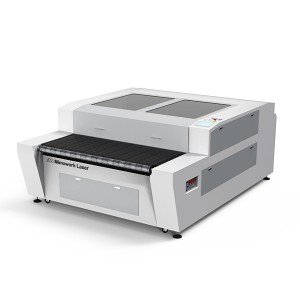
Fabrics Laser Cutter
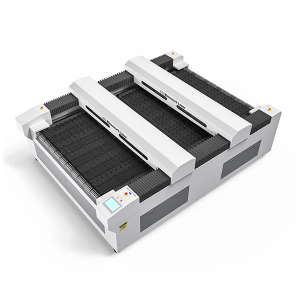
Large Format Fabrics Laser Cutter
Video Display | Glance for Cordura Laser Cutting
title="Cordura Laser Cutting - Making a Cordura Purse with a Fabric Laser Cutter"
frameborder="0"
allow="accelerometer; autoplay; clipboard-write; encrypted-media; gyroscope; picture-in-picture; web-share"
referrerpolicy="strict-origin-when-cross-origin"
allowfullscreen
loading="lazy">