Which Cutting Machine is Best for Fabric?
Which cutting machine is best for fabric
No single cutting machine is best for every fabric. Knife cutting can suit applications that require a heat-free edge. Die cutting can suit repeat production of the same shape. Laser cutting machines for fabric can be considered for compatible materials that require detailed digital contours or a heat-sealed edge.
The final choice depends on the material, number of layers, required edge, production volume, and total cost.

Table of Contents
Three Methods for Cutting Fabric
| Cutting method | Material and edge | Layers and production | Cost considerations |
|---|---|---|---|
| Knife Cutting | Can suit materials that require a heat-free mechanical edge. | Manual tools may suit samples and low-volume work. Powered or CNC knife systems may support digital patterns and larger production requirements. Layer capacity depends on the material, blade, hold-down method, and machine configuration. | Include blades, labor, material handling, cutting tables, maintenance, and scrap. |
| Die Cutting | Produces a mechanical edge using tooling made for a specific shape. | Can suit repeated production of the same shape. Layer capacity depends on the material, die, press, and stack preparation. Frequent design changes may require additional dies. | Include die production, die storage and management, setup, changeovers, press operation, maintenance, and expected repeat volume. |
| Laser Cutting | Can suit compatible materials that require detailed digital contours, contactless processing, or a sealed edge on some synthetic fabrics. Material testing is required. | Do not assume suitability for every material or number of layers. Verify the composition, coating, thickness, heat response, positioning method, and complete production cycle. | Include the machine, extraction, safety equipment, software, energy, maintenance, and scrap. |
How to Confirm the Best Machine for Your Fabric
You can use this checklist during sample testing to decide whether the machine is suitable for your application. After completing the checklist, review each failed item and determine whether the result is acceptable for your product and production requirements.
| Test item | Pass ✓ | Fail ✗ | Result to record |
|---|---|---|---|
| Actual production material was tested | ☐ | ☐ | Material and composition |
| Required number of layers was tested | ☐ | ☐ | Number of layers |
| Final production design or file was used | ☐ | ☐ | File or pattern version |
| Material was cut completely | ☐ | ☐ | Missed or incomplete areas |
| Dimensions meet the required tolerance | ☐ | ☐ | Measured dimensions |
| Edge quality meets the requirement | ☐ | ☐ | Edge finish |
| Discoloration is acceptable | ☐ | ☐ | Location and severity |
| Melting or hardening is acceptable | ☐ | ☐ | Affected areas |
| Fraying is within the acceptable limit | ☐ | ☐ | Edge condition |
| Residue can be accepted or removed | ☐ | ☐ | Cleaning required |
| Material movement is controlled | ☐ | ☐ | Shifting or distortion |
| Complete production cycle was measured | ☐ | ☐ | Cycle time per part |
| Production capacity meets the target | ☐ | ☐ | Acceptable parts per hour |
| Loading and unloading are practical | ☐ | ☐ | Handling time |
| Extraction and safety equipment are confirmed | ☐ | ☐ | Required equipment |
| Consumable and maintenance requirements are confirmed | ☐ | ☐ | Expected recurring cost |
| Cost per acceptable part meets the target | ☐ | ☐ | Calculated unit cost |
Decision: Select the machine only when the required quality checks pass, the measured production capacity meets the target, and the complete cost per acceptable part is within budget.
Practical Tips for Cutting Fabric
The following straightening fabric tips and techniques explain how to keep the material flat, aligned, and stable for straighter, more consistent cuts.
title="Denim Laser Cutting Guide | How to Cut Fabric with a Laser Cutter | MimoWork Laser"
frameborder="0"
allow="accelerometer; autoplay; clipboard-write; encrypted-media; gyroscope; picture-in-picture; web-share"
referrerpolicy="strict-origin-when-cross-origin"
allowfullscreen
loading="lazy">
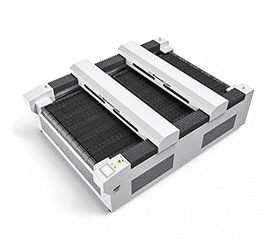
Industrial Fabric Laser Cutter 160L
Industrial Fabric Laser Cutter 160L

Laser Cutter for Cloth 160

Textile Laser Cutting Machine 180
Conclusion
No single cutting machine is best for every fabric application. Knife cutting can suit materials that require a heat-free edge, die cutting can support repeated production of the same shape, and laser cutting can process compatible fabrics that require detailed digital contours or sealed edges.
Compare each method using the actual material, number of layers, required edge, production volume, and total cost. Use the sample-testing checklist to identify failed items and decide whether those limitations are acceptable. Select the machine only when it meets the required quality, production capacity, safety, and cost per acceptable part.